A restaurant safety checklist only works when it fits the pace of service. It should help a manager catch the loose mat, missing sanitizer, blocked aisle, equipment concern, or staffing question before the room fills up. It is not a substitute for local requirements, food-safety procedures, professional advice, or insurance coverage. It is a practical way to start the shift with fewer assumptions.
The most useful checks are specific, visible, and assigned to someone. They take place where the work happens: at the entrance, on the line, in the dish area, around storage, and at the manager station. Use the list below as a daily starting point, then adjust it for the way your restaurant actually operates.
1. Walk the guest areas before the doors open
Begin where guests will walk. Look at the entry, host stand, dining room, patio, restrooms, waiting area, and any route to pickup or carryout. Check for wet spots, loose rugs, curled mats, uneven transitions, crowded furniture, damaged chairs, poor lighting, and anything stored in a walkway. Rain, snow, deliveries, and a rushed reset can change the condition of a space in minutes.
Do not make the walk-through a vague instruction to “be careful.” If you see a concern, decide what happens next: dry it, mark it, move it, repair it, or keep guests out of the area until it is safe. The Occupational Safety and Health Administration’s restaurant safety guidance identifies slips, trips, and falls as recurring restaurant hazards. A direct check before service is easier than trying to reconstruct a condition after an injury.

2. Clear exits, aisles, and work paths
Every part of a restaurant gets busier once service starts. Confirm that exit doors, corridors, stairs, storage routes, and paths between the kitchen and dining room are not blocked by boxes, carts, chairs, deliveries, trash, or temporary displays. Check that staff can move through the line without carrying hot, sharp, or heavy items through a pinch point.
This is not just a front-of-house task. A blocked prep aisle can lead to a lifting injury or a collision. A narrowed route near the dish area can put a server in the path of hot pans. Give the shift a simple rule: if an item does not belong in the work path, move it before the rush. E&A’s broader restaurant risk management checklist helps owners connect these daily details to property, records, employee safety, and recovery planning.
3. Check the cooking line and fire controls
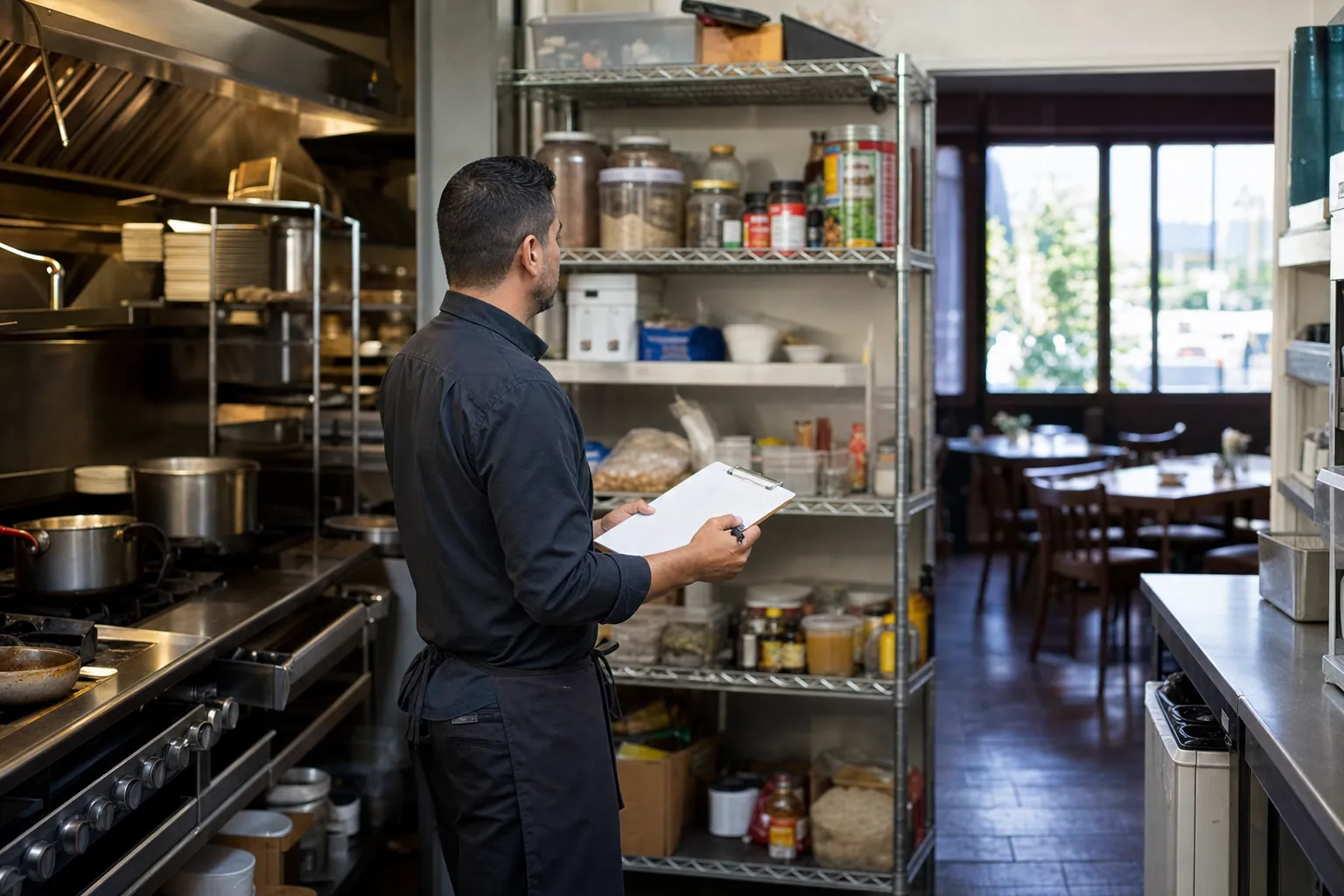
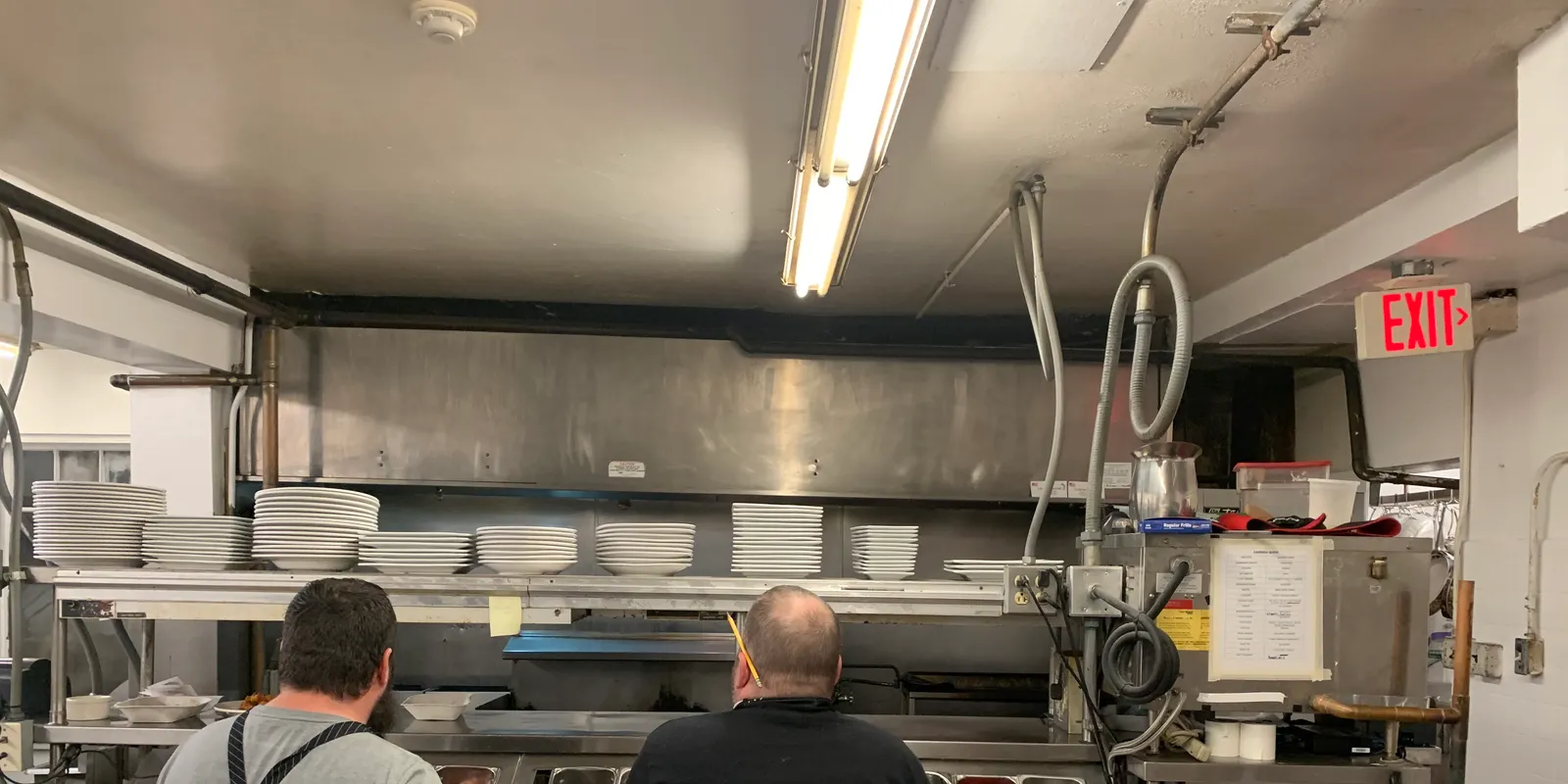
Before cooking begins, look over the hood, filters, cooking equipment, clearances, extinguishers, suppression-system access, and floor condition around the line. Watch for grease buildup, unusual equipment behavior, damaged cords, missing guards, or a maintenance item that was mentioned yesterday but never closed out. The shift does not need to diagnose a technical problem. It does need a clear answer about whether the equipment is safe to use and who is handling the follow-up.
Keep service and cleaning records where the manager can find them. A hood, suppression system, fryer, oven, or refrigerator can be easy to ignore until the moment it becomes impossible to operate. E&A’s restaurant kitchen fire prevention guide and insurance inspection checklist give owners a closer review of the maintenance and documentation questions behind that daily check.

4. Confirm food-safety basics are ready for the shift
Safety includes the controls that protect guests from a food-related problem. Before opening, confirm that handwashing stations are accessible and supplied, sanitizing procedures are ready, refrigeration and hot-holding equipment are operating normally, and the team knows how to handle any temperature or contamination concern. The FDA Food Code is a model used by many retail food programs and is a useful reference for these core controls.
Keep it tied to the actual operation. A restaurant does not gain much from a checklist that says “check food safety” without naming the task, location, owner, and response when something is wrong. Ask: are the logs current, are the right supplies in place, has a piece of equipment been acting up, and does the team know who to tell before product is served? The answer should be clear before the first ticket arrives.
5. Set up for cuts, burns, lifting, and chemicals
Restaurant injuries often happen during familiar work, not unusual work. Before the shift, confirm that knives, slicers, gloves, carts, step stools, mats, and protective equipment are where the team expects them to be. Check whether a delivery needs two people or a cart, whether a new employee is about to use unfamiliar equipment, and whether cleaning chemicals are stored and labeled appropriately.
A brief pre-shift conversation can make this practical: What delivery is arriving? What equipment is down? Where will the team be tight on space? Who is new to the station? Who is handling the heavy or hot work? E&A’s guide to common workers’ compensation claims at restaurants covers the injuries that can disrupt a team, while the workers’ compensation coverage page explains why payroll, roles, locations, and the work itself should be accurately reflected in the insurance conversation.
6. Make sure the manager and team know the plan
A safety routine works best when people can speak up without slowing down the shift. Make time for a short huddle before service. Cover changes in staffing, weather, reservations, catering, equipment, layout, deliveries, or any recent incident. Confirm who can make a call about an unsafe condition, who takes over if a manager is occupied, and where staff should go for first-aid supplies or emergency contact information.
Managers should avoid turning a close call into a blame exercise. A server who reports a slippery entrance, a cook who flags a damaged tool, or a dishwasher who notices a leak is giving the restaurant a chance to act early. Record the concern, resolve it where possible, and pass along any open item to the person responsible for the next step.
7. Review deliveries, vendors, and outside work
Opening hours often overlap with deliveries, repairs, cleaning crews, pest control, contractors, and vendor visits. Confirm where people will enter, where they can stage materials, and which manager is responsible for directing them. Keep loading areas, back doors, and service corridors orderly, especially when a driver is moving product through a busy kitchen or dining room.
When outside work or a new agreement affects the restaurant, keep the paperwork from becoming a last-minute surprise. Certificates, property access, equipment responsibility, and insurance requirements may need a closer look before the work starts. The restaurant insurance requirements guide can help an owner organize the contracts, locations, and operating details that belong in that conversation.
8. Check the records that matter when something goes wrong
An incident is easier to handle when the restaurant can quickly find the basics: manager contact information, emergency numbers, service records, equipment invoices, incident forms, vendor contacts, current policy documents, and a clear process for reporting a concern. Keep these in one known place, with access that does not depend on a single person’s phone or inbox.
For digital accounts, know who has access to point-of-sale systems, payroll, banking, scheduling, and vendor portals. The Cybersecurity and Infrastructure Security Agency’s Secure Our World guidance emphasizes practical habits such as strong passwords, multifactor authentication, updates, and recognizing phishing. Those habits belong in restaurant operations because a compromised account can create a disruption just as quickly as a broken piece of equipment.
9. Know what changes deserve an insurance conversation
A daily checklist should also make changes easier to notice. New equipment, extended hours, a patio, a bar program, delivery, catering, a second location, a major renovation, more employees, or a new contract can all change the details behind an insurance review. Bring those changes forward before renewal rather than assuming last year’s policy description is still close enough.
Use E&A’s coverage overview to understand the broader protection a restaurant may need to discuss, from liability and property to business income and employee-related coverage. The separate Illinois restaurant liability guide is useful when guest injuries, food service, contracts, alcohol service, delivery, or catering create a more specific question.
10. Keep a simple response plan for a bad day
Some events need more than a quick fix. A fire, water loss, power failure, refrigeration problem, injury, guest complaint, or security concern can interrupt the operation long after the immediate issue is under control. The Federal Emergency Management Agency’s business preparedness resources are a useful reminder to plan before an emergency, when there is time to make decisions calmly.
Identify who can close the restaurant, authorize emergency spending, contact staff, notify vendors, and locate key records. Keep a current list of restoration, refrigeration, electrical, plumbing, and equipment-service contacts. For the insurance side, E&A’s business interruption guide for restaurants explains why recovery depends on the real operations and financial records behind the business, not only on the visible damage.
11. Assign open items before the shift gets away from you
A checklist is only useful when it produces action. When you find an issue, write down what needs to happen, who owns it, and when it will be finished. Small items can be handled immediately. Larger concerns may require a work order, vendor call, insurance question, or decision by the owner. The important part is that they do not disappear because the dinner rush began.
At the next shift, ask whether open items were completed or still need a temporary control. This creates a basic loop: notice, act, verify, and document. It is far more effective than collecting a stack of generic forms that no one reviews.
12. Use the checklist to support, not replace, good judgment
Every restaurant has a different rhythm. A counter-service concept, pizzeria, tavern, food truck, banquet hall, and full-service dining room will not share the exact same hazards. Keep the core routine, then add the conditions that reflect your own operation. The point is not to make staff recite a script. It is to make it easier to pause, see a concern, and respond before the risk becomes urgent.
E&A Insurance Group brings more than 35 years of restaurant owner-operator perspective to insurance conversations. That means starting with the everyday operation: the kitchen, the people, the property, the contracts, and the changes that can catch an owner off guard. Use this checklist to prepare, then visit the Illinois restaurant insurance guide or send a free quote request when it is time to discuss your restaurant.
Questions owners ask
Restaurant safety checklist FAQs
How often should a restaurant safety checklist be reviewed?
A short before-shift review is useful every day because conditions change with deliveries, weather, staffing, equipment, and the service plan. A more detailed owner review can happen weekly or monthly, with a fuller check before renewal, a busy season, or a major operational change.
What are the most common restaurant safety hazards?
Common hazards include slippery floors, blocked aisles or exits, cuts, burns, lifting injuries, chemical exposure, equipment problems, food-safety mistakes, and rushed work during a busy shift. The right priorities depend on the operation, so managers should focus on the areas where their own team works fastest.
Who should complete a restaurant safety check?
The manager on duty can lead the check, but the people doing the work should be part of it. Kitchen, front-of-house, dish, delivery, and maintenance team members often see hazards first. Give open items to a named person and make sure the manager knows what needs to be corrected before service.
Does a restaurant safety plan replace insurance?
No. Safe operations can reduce avoidable problems, but insurance addresses different questions and is always subject to the policy terms, limits, exclusions, and facts of a loss. The strongest approach combines sensible operating routines with a coverage review that accurately reflects the restaurant.
Images: restaurant kitchen photo by Mark Buckawicki, CC0. Wet-floor photo by Leidwai Fenzie Thwomma, CC BY-SA 4.0. Kitchen hood photo, public domain. Images accessed through Wikimedia Commons.