Most restaurant kitchen fires are not random. They begin with a condition that had time to build: grease in the exhaust path, an unattended fryer, equipment that needs repair, or combustible items left too close to heat. The strongest fire-prevention program is built into the daily close, the monthly walk-through, and the service records you keep.
This guide turns the most important kitchen-fire risks into practical questions for owners and managers. It does not replace the requirements of the local fire authority, your equipment manufacturer, or a qualified fire-protection contractor. It helps you recognize where a small habit can become a serious interruption.
Start with grease you cannot see
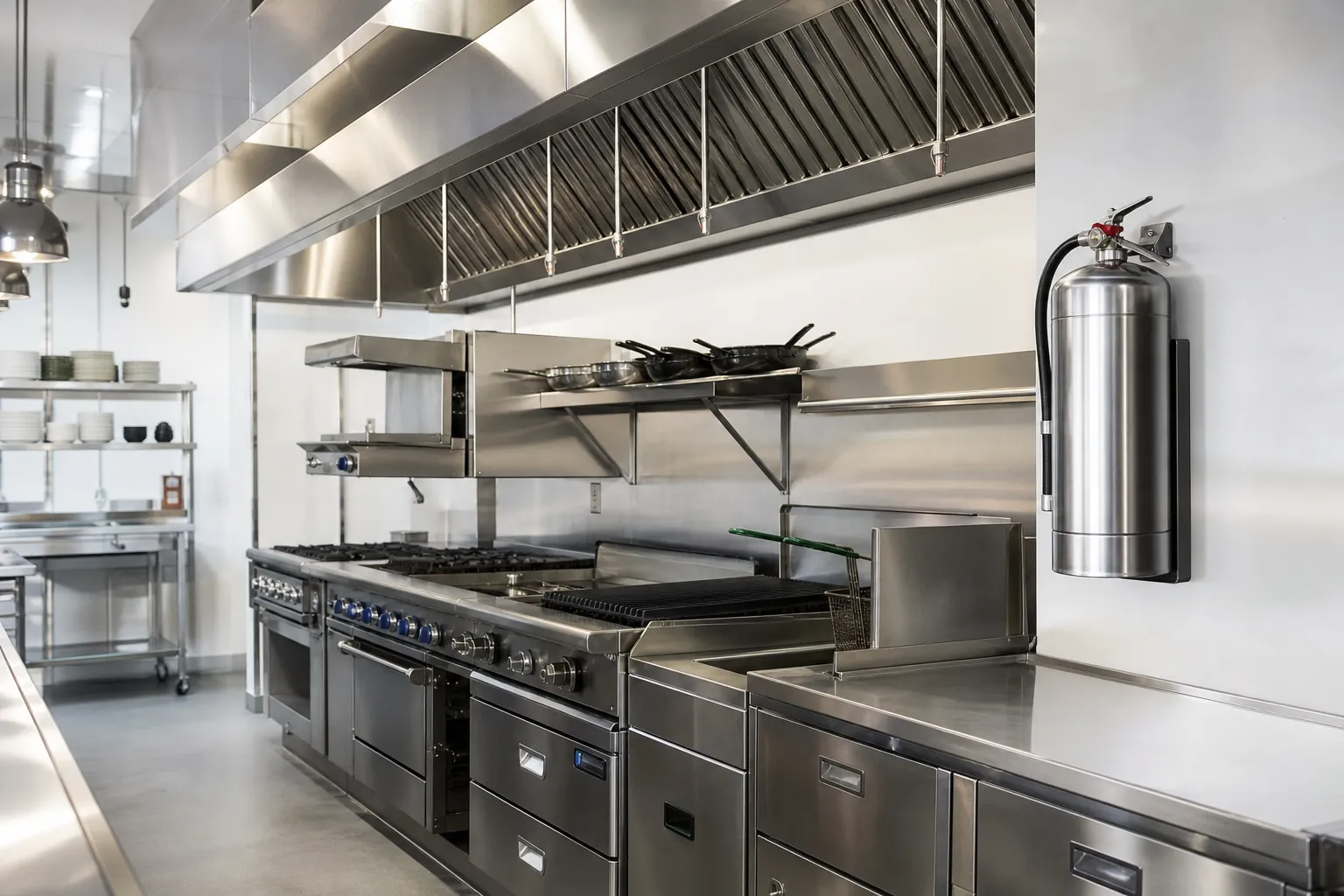
Grease-laden vapors do not stop at the cooking line. They move through the hood, filters, plenum, ducts, and exhaust fan. Over time, accumulation can create a path for fire to travel beyond the appliance. The National Fire Protection Association's NFPA 96 standard governs ventilation control and fire protection for commercial cooking operations.
The inspection schedule depends on cooking type and volume, not how busy the dining room looks. Solid-fuel cooking operations are generally inspected monthly. High-volume cooking, including charbroiling, wok cooking, and 24-hour operations, is generally inspected quarterly. Moderate-volume operations are generally inspected semiannually, and low-volume operations annually. Cleaning is required when grease accumulation is found, so the qualified provider and local authority should confirm the schedule for your kitchen.
Keep the certificate and service report where they can be produced quickly. Also make filter care a closing responsibility. The goal is not simply to pass an inspection. It is to keep grease from building into the fuel a small flare-up needs to become a larger loss.
Give fryers active supervision
Fryers demand attention because hot oil can ignite and can reignite if it is not cooled and suppressed correctly. During prep and a rush, make one person responsible for the fryer. Use timers, follow the manufacturer’s operating procedures, and make sure the team knows who takes over when someone steps away.
Do not treat a grease fire like an ordinary trash-can fire. Water can spread burning grease. Staff should know the restaurant’s approved emergency procedure, the location of the manual pull station, and the location and intended use of the Class K extinguisher when one is provided. Training should be practical and repeated, especially when managers or line cooks change.
Maintain equipment before it becomes an emergency
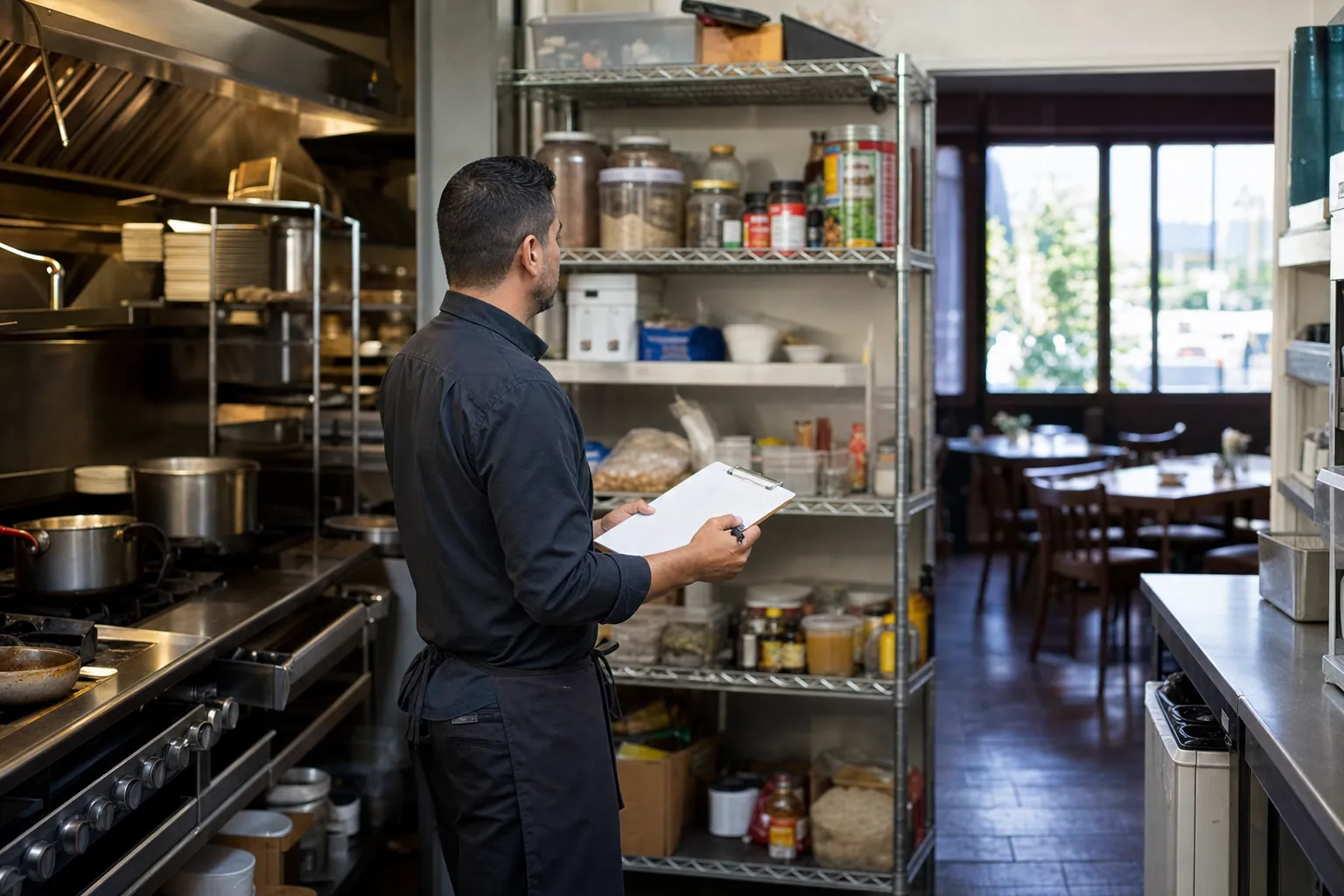
A kitchen fire-prevention walk-through should include electrical cords, plugs, gas connections, hood fans, belts, appliances, and clearances around heat-producing equipment. A frayed cord, a loose connection, an appliance that runs hotter than normal, or a fan that has been making noise for months deserves a prompt service call, not a note that gets carried from one shift to the next.
Avoid improvised electrical setups. Extension cords and overloaded power strips are not a permanent solution for commercial equipment. Ask a qualified electrician, equipment technician, or landlord to address the underlying need. Document what was found, who was contacted, and when the repair was completed. Those records are useful for safer operations and clearer insurance conversations.
Keep combustibles away from the cooking line
Cardboard, paper products, bar towels, aerosol sprays, plastic containers, and stored deliveries can drift too close to heat during a busy shift. The risk is often not a single careless moment. It is a layout or closing habit everyone has learned to accept. Walk the line with fresh eyes and remove what does not belong there.
Keep the manual pull station, exits, and access to fire-protection equipment clear. Ask the fire authority or qualified contractor about the correct clearances and equipment placement for your specific layout. A safe kitchen is easier to operate when the rule is simple: nothing combustible gets stored in the path of heat, flame, or fire-protection equipment.
Know what the suppression system is designed to protect
Commercial cooking systems must be installed, inspected, and maintained according to their listing, the applicable code, and the requirements of the authority having jurisdiction. UL 300 is the fire-test standard for extinguishing systems that protect commercial cooking equipment. UL’s commercial cooking guide explains that Type I hood systems generally require an automatic fire-extinguishing system and that actuation should shut down the fuel or electrical supply to the protected equipment.
Do not assume an older system is adequate or that a system still protects the current cooking line after equipment changes. A qualified fire-protection contractor can confirm the design, nozzles, appliances, service tags, manual pull station, and shutoff arrangement. If you change a fryer, grill, range, or hood layout, bring the contractor in before the next inspection finds a mismatch.
Build a kitchen-fire routine your team can follow
- Assign daily filter cleaning and keep the cooking line free of grease and clutter.
- Give fryers an active owner during prep and service, with a clear handoff when shifts change.
- Keep exits, pull stations, extinguishers, and suppression-system access clear.
- Walk the kitchen monthly for cords, gas connections, fan issues, damaged equipment, and unsafe storage.
- Schedule hood, duct, and suppression-system service with qualified providers and retain the records.
- Train every kitchen employee on the restaurant’s fire procedure and when to evacuate and call 911.
How E&A helps restaurant owners prepare for a fire loss
Fire prevention and insurance work best together. A restaurant fire can raise questions about property damage, business interruption, food spoilage, equipment breakdown, and the time it takes to reopen. E&A brings restaurant owner-operator experience to the conversation, so the review begins with your cooking line, property, records, and real operating pressures.
Use our restaurant insurance guide to review the larger picture, read the restaurant insurance inspection checklist, or contact E&A for a free coverage review.
Questions owners ask
Restaurant kitchen fire FAQs
How often should a restaurant kitchen hood be inspected?
The NFPA 96 schedule depends on the type and volume of cooking. Solid-fuel operations are generally inspected monthly, high-volume operations quarterly, moderate-volume operations semiannually, and low-volume operations annually. A qualified provider and the local authority can confirm what applies to a specific kitchen.
Can water be used on a grease fire?
No. Water can spread burning grease and make the fire worse. Train staff on the equipment and emergency procedures approved for the kitchen, including the manual suppression pull station and Class K extinguisher where required.
Does a kitchen fire affect restaurant insurance?
It can. A fire can involve property damage, business interruption, food spoilage, equipment breakdown, and liability questions. The policy, endorsements, cause of loss, maintenance records, and facts of the incident all matter.