Restaurant insurance requirements are rarely a single checklist. They are usually a mix of obligations and practical decisions that come from the way the business operates. A lease may set one set of expectations. A lender, franchise agreement, alcohol program, employment rule, or vendor contract may add another. The policy itself then has to reflect the restaurant that is actually open for service, not a simplified description of it.
That is why a restaurant owner should not wait until a certificate is due to ask what coverage is needed. The better time is before signing a lease, renewing a policy, opening another location, adding a bar, taking on delivery, or accepting a new contract. The work is not about collecting the longest list of coverage names. It is about identifying what the business has promised, what it owns, who it employs, and what could disrupt a busy week.
Start with the source of the requirement
The word "required" can mean different things. Some requirements come from law. For example, Illinois employers should understand the state's workers' compensation insurance rules before assuming a staffing change has no insurance consequence. Other requirements come from agreements the owner chooses to sign, such as a commercial lease, loan documents, an event contract, or a franchise agreement.
A landlord may ask for specific liability limits, an additional insured endorsement, or a certificate before handing over the keys. A lender may want proof that a building, equipment, or other collateral is protected. A delivery partner or catering venue may require certificates before a contract begins. None of those documents should be treated as administrative details. They are part of the operating commitments the restaurant has made.
Begin by collecting the relevant pages from each agreement. Highlight insurance limits, named parties, notice language, special endorsements, and certificate deadlines. Then compare that list with the policy's declarations and endorsements. A request for proof of insurance is not the same as a promise that every policy detail meets the contract, so ask direct questions when the wording is unclear.
Describe the operation, not just the cuisine
Restaurant insurance requirements become clearer when the conversation begins with how the business works on a normal day. A small counter-service restaurant does not have the same exposures as a full-service dining room with a bar, private events, a patio, delivery drivers, and late hours. Two operations with similar sales can need very different discussions because the property, staffing, contracts, and guest experience are different.
Write down every location, legal entity, and activity that belongs in the insurance conversation. Include food and alcohol sales, carryout and delivery, catering, event space, outdoor seating, company vehicles, leased equipment, property ownership, and planned changes. Use E&A's restaurant and food business list as a reminder of how varied a food-and-beverage operation can be. The category name on an application should never do all the work of explaining the business.
It also helps to note what has changed since the last policy period. Did the restaurant extend hours, add a second concept, take over an adjacent suite, begin hosting ticketed events, buy a delivery vehicle, or take on more off-premises catering? Those are not minor details to save for renewal. Sharing them early makes it easier to check whether the current program still matches the operation.
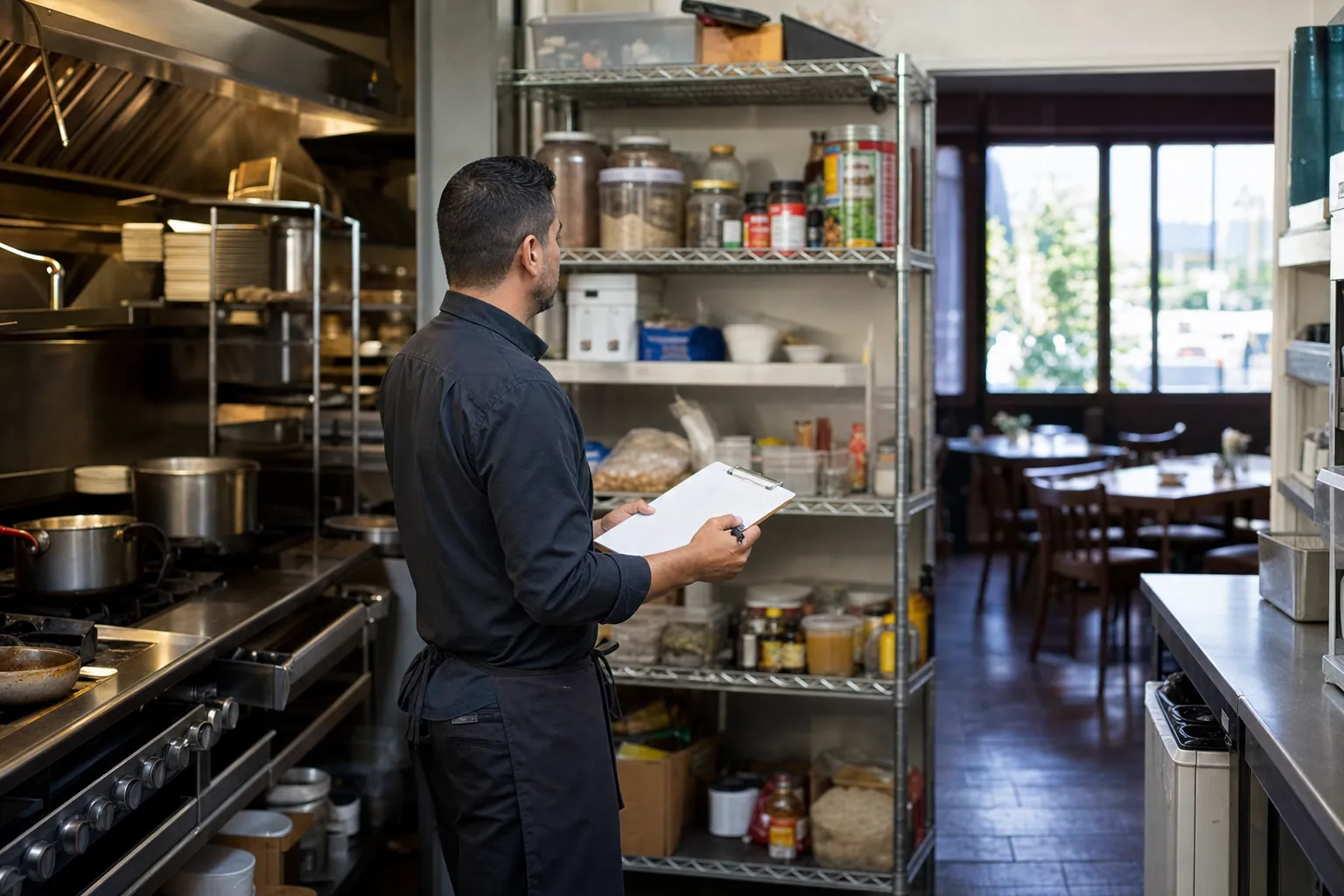
Review the coverage areas that support the operation
A restaurant program often includes several policies or coverage parts that work together. The U.S. Small Business Administration's insurance overview is a useful reminder that business insurance can address different property, liability, employee, and interruption concerns. The exact protection, limits, exclusions, deductibles, and conditions still depend on the policy and the restaurant.
For a restaurant owner, the review often starts with general liability, commercial property, business interruption, and workers compensation. Depending on the operation, it may also involve product liability, commercial auto, cyber, equipment breakdown, spoilage, employment practices, umbrella coverage, or other considerations. E&A's restaurant insurance coverage guide provides a plain-language starting point for those core areas.
The useful question is not whether a familiar coverage name appears on a summary. Ask how the parts fit together. Does the policy reflect the right location and entity? Does it account for tenant improvements, kitchen equipment, inventory, or a vehicle? Does the business understand when a deductible, exclusion, endorsement, or reporting condition matters? A policy review should leave the owner with clearer decisions, not just another document to file.
Property is a good example of why the details matter. An owner may be responsible for a building, tenant improvements, refrigeration, ovens, furniture, inventory, signage, or only a portion of those items under the lease. A restaurant that leases a space needs to understand where the landlord's responsibilities end and the tenant's begin. The same care applies to business interruption: owners should ask what event must occur, which expenses and income are considered, how long a restoration period may last, and what records support a claim. Those answers come from the policy and the facts of the loss, not a broad label on a quote.
Give alcohol service its own review
Alcohol service deserves a direct conversation because it can affect coverage, contracts, operations, and the information an insurer needs. The Illinois Liquor Control Commission is the starting point for state liquor licensing information, but local licensing and an individual operation's agreements can add their own conditions. A beer-and-wine restaurant, a full bar, a late-night tavern, a catering program, and an event space do not present the same questions.
Describe how alcohol is sold and served, who can serve it, whether private events or catering are involved, and how managers handle incidents. Then review how general liability, liquor liability, and any umbrella coverage work together. E&A's liquor liability guide for restaurant owners explains the operational details that should be part of that conversation.
This is also where a one-page certificate can create false confidence. It may satisfy a request for evidence, but it does not explain policy wording or replace a review of what is included, excluded, limited, or subject to a condition. When alcohol sales, event activity, hours, or service practices change, bring that update to the advisor before the next busy season.

Read the lease and contracts before they become urgent
The insurance section of a restaurant lease can have more practical impact than owners expect. It may specify liability limits, require a landlord or property manager to be named in a certain way, set certificate delivery deadlines, or describe what happens after a loss. A franchise agreement, lender package, vendor contract, or event agreement can do the same.
Do not wait until a landlord asks for a certificate on the morning a new location is set to open. Share the agreement early, alongside the restaurant's full operating details. That gives the owner, advisor, lender, and legal counsel where appropriate time to resolve questions without delaying a move, renewal, or contract. Insurance is most useful when it supports the commitments the business is about to make, not when it is trying to catch up with them.
Keep the finished documents organized in one place: current policies, declarations pages, certificates, endorsements, lease requirements, lender requirements, and a short operational summary. Update the summary when the restaurant changes. That simple habit makes renewal, expansion, and certificate requests much easier to handle under real-world pressure.
Prepare for renewal with current numbers and facts
Renewal is a chance to test whether the policy still describes the business. Compare the current policy to the prior one, but do not compare premium alone. A lower price can reflect a meaningful change in a limit, deductible, endorsement, exclusion, scheduled location, or activity. Ask for a clear explanation of what changed and why it matters to the operation.
Bring updated sales and payroll information, employee counts, major equipment purchases, property improvements, vehicle changes, alcohol sales, new contracts, and any claims or incidents. The restaurant should also discuss future plans. A patio project, new bar program, second location, delivery expansion, or catering contract can be easier to plan when the coverage conversation starts before money has been committed.
Ask who inside the business owns each follow-up. One person may keep lease documents current, another may track payroll and sales, and a manager may know more about equipment, delivery, or event activity. A short pre-renewal check-in across those roles prevents important changes from being lost between operations, accounting, and the insurance conversation.
There are operational obligations worth reviewing alongside insurance. The Occupational Safety and Health Administration's standards are a useful official resource when an owner is thinking through workplace responsibilities. A restaurant does not need to turn a renewal meeting into a compliance seminar, but the owner should know when staffing, equipment, or work practices need a closer look from the right specialist.

A practical restaurant insurance requirements checklist
Before signing, renewing, or expanding, use this checklist to make the insurance conversation more useful:
- Gather the insurance sections of leases, loans, franchise agreements, and key contracts.
- List every restaurant location, legal entity, vehicle, property interest, and operating activity.
- Update sales, payroll, employee, equipment, alcohol, delivery, catering, and event details.
- Review general liability, property, business interruption, workers compensation, and relevant specialty coverage together.
- Ask how alcohol service, private events, patios, delivery, and catering affect the program.
- Compare the current policy with the prior policy before deciding based on premium alone.
- Keep certificates, declarations, endorsements, and requirements in one current file.
- Raise planned changes before signing a contract or waiting for renewal.
The checklist is a way to prepare for a more informed conversation, not a substitute for policy, legal, licensing, or employment advice. The right answer always depends on the restaurant, its agreements, the law that applies, and the policy that is actually in force.
How E&A helps restaurant owners review the details
E&A Insurance Group approaches insurance from the owner-operator side of the restaurant business. That experience matters because useful questions are not limited to a form. They include how the kitchen runs, what changes on a Friday night, what a lease requires, and which details can create pressure later if no one asks about them now.
For an Illinois restaurant, bar, pizza place, food truck, banquet hall, convenience store, or liquor store, the first step is a clear picture of the operation. E&A's Illinois restaurant insurance guide explains the broader local coverage conversation. When you are ready to discuss your own business, use the free quote request or call 847-651-3834.
Questions owners ask
Restaurant insurance requirements FAQs
Is there one insurance policy every restaurant is required to buy?
There is no single restaurant policy that fits every business. Requirements can come from employment rules, a lease, a loan, a franchise agreement, an alcohol license, a vendor contract, or the way the restaurant operates. Review the full set of obligations and the policy wording with an insurance professional instead of relying on a generic list.
What insurance information does a landlord usually ask a restaurant to provide?
A lease may ask for proof of certain liability limits, property coverage, additional insured wording, a certificate of insurance, or notice requirements. Read the insurance section of the lease before signing, then compare it with the actual policy and endorsements. A certificate is evidence of coverage, not a replacement for that review.
When should a restaurant update its insurance information?
Update the conversation whenever the operation changes in a material way. A new location, patio, bar program, delivery vehicle, catering contract, landlord, ownership structure, event schedule, major equipment purchase, or change in hours can affect the information an insurer needs.
What should a restaurant bring to an insurance renewal meeting?
Bring the current policy, declarations pages, lease or lender requirements, certificates, payroll and sales information, equipment and property changes, vehicle details, alcohol sales information, new contracts, and a clear account of claims or incidents. The goal is to describe the current business, not last year's version of it.