Workers' compensation is easy to treat as a required line on a policy. In a restaurant, it is much more personal. It is about the dishwasher carrying a heavy bus tub, the line cook working through a rush, the server crossing a damp floor, and the new employee learning a fast-moving kitchen. The strongest program protects the team first and helps the business avoid the cost and disruption of preventable injuries.
Restaurant work puts people close to knives, heat, wet floors, repetitive motion, and heavy or awkward supplies. The good news is that many of the most common injuries respond to simple operating habits, practiced consistently. This guide highlights the claims restaurant owners should watch and the practical conversations worth having before someone gets hurt.
1. Cuts, punctures, and scrapes
Sharp tools are part of restaurant work, so cuts are not surprising. In its 2024 restaurant risk report, AmTrust found that cuts, punctures, and scrapes were the most common restaurant injuries in its review of nearly 130,000 workers' compensation claims from 2018 through 2023. The average claim cost was $1,798. A smaller claim can still interrupt a shift, create a staffing problem, and become more serious when a wound is ignored or handled poorly.
Give every knife a home, keep blades sharp enough to cut without excessive force, and make the safe tool the easy tool to reach. Train employees to carry knives correctly, use stable cutting boards, and never leave a knife hidden in a sink or under a towel. Use cut-resistant gloves where the task calls for them, particularly during repetitive prep or cleaning. Managers should correct unsafe shortcuts without turning the correction into a public embarrassment. The goal is a team that speaks up before a close call becomes an injury.

2. Strains and sprains from lifting and repetitive work
Strains and sprains can begin with one awkward lift or build over weeks of repetitive movement. Think about a stock pot, a case of fryer oil, a keg, a delivery box, or a server repeatedly reaching into a low cooler. In the same AmTrust report, average strain and sprain claims cost $10,672 and $9,966, respectively. It also found that back injuries were less common but much more expensive, with typical paid claims for disc, vertebrae, and spinal cord injuries ranging from $60,000 to $85,000.
Look at the job, not just the person. Put heavy, frequently used items between knee and shoulder height whenever possible. Use carts for deliveries and stock movement. Break down heavy loads, plan a two-person lift before the rush begins, and make sure employees know they are allowed to ask for help. Small layout changes matter: a clear path, a working hand truck, and a reachable shelf can be more valuable than a poster about lifting technique.

3. Slips, trips, and falls
Restaurant floors change by the minute. Ice near the bar, a splash at the dish area, rain at the entrance, a torn mat, or a box left in a walkway can create a serious hazard. The Travelers 2026 Injury Impact Report identifies slips, trips, and falls among the leading causes of claims exceeding $250,000 across the industries it analyzed. That is a useful reminder not to dismiss a wet-floor issue as routine restaurant mess.
Assign clear ownership for walking surfaces on every shift. Clean spills promptly, use wet-floor signs while the surface is being addressed, keep mats flat and in place, and protect walkways from deliveries, cords, and loose equipment. Check lighting at entrances, exits, stairs, and back-of-house corridors. When weather changes, change the routine too. More frequent floor checks during rain or snow are a practical adjustment, not an overreaction.
4. Burns and scalds
Hot oil, steam, ovens, grills, coffee equipment, and dish machines can all cause burn injuries. AmTrust reported burns and scalds as the second-largest category of restaurant injuries, with an average claim cost of $4,326. Prevention begins with well-maintained equipment and a pace of work that does not force employees to improvise around hazards.
Use dry, appropriate gloves and mitts, keep pan handles turned away from traffic, and give hot oil, soups, and sauces a predictable route through the kitchen. Post no one in a position where a hot pan must pass through a crowded doorway or around an unexpected corner. Follow equipment instructions for fryers, ovens, steamers, and coffee machines. If a piece of equipment leaks, overheats, or has a broken guard, remove it from normal use until it is properly evaluated.
5. Injuries involving more than one body part
Some incidents do not fit neatly into one category. A fall while carrying a tray, an impact with equipment, or a lifting incident can affect more than one body part and complicate recovery. The details matter because these claims can involve medical care, time away from work, and a difficult return to a physical job. A clear injury-response plan helps everyone focus on the employee rather than figuring out the process in the moment.
Make sure supervisors know who to call, where first-aid supplies are kept, how to document an incident, and how to report it promptly. Preserve the facts without deciding who is at fault. Ask what happened, identify the immediate hazard, and correct it if possible. A respectful response builds trust, and trust makes employees more likely to report problems before they grow.
New-hire safety deserves its own plan
New employees often need the most help learning the rhythm and hazards of a restaurant. Travelers' 2026 analysis of more than 1.2 million workers' compensation claims found that first-year employees represented 51% of injuries in restaurants. That statistic does not mean a new hire is the problem. It means the first days and weeks of training are a real opportunity for managers to define safe work instead of assuming experience transfers automatically.
Build a short orientation around the work the employee will actually do: knife and slicer safety, hot equipment, lifting, floor hazards, chemical handling, emergency exits, and what to do after an injury. Pair the person with someone who demonstrates the task correctly, then confirm understanding by watching the task performed. Reinforce the same habits during the first few shifts, when a new employee is most likely to be trying to keep up.

A practical pre-shift safety routine
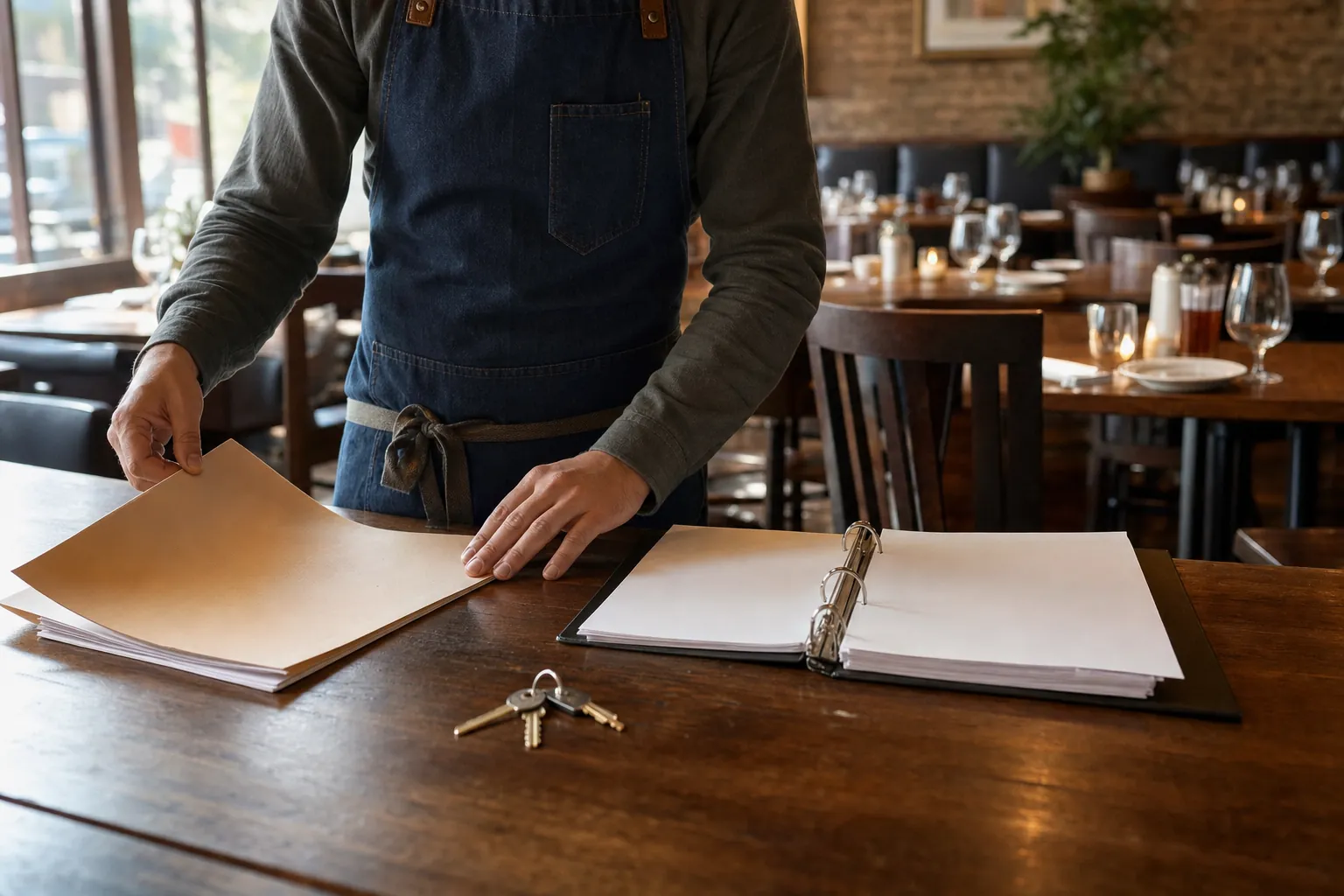
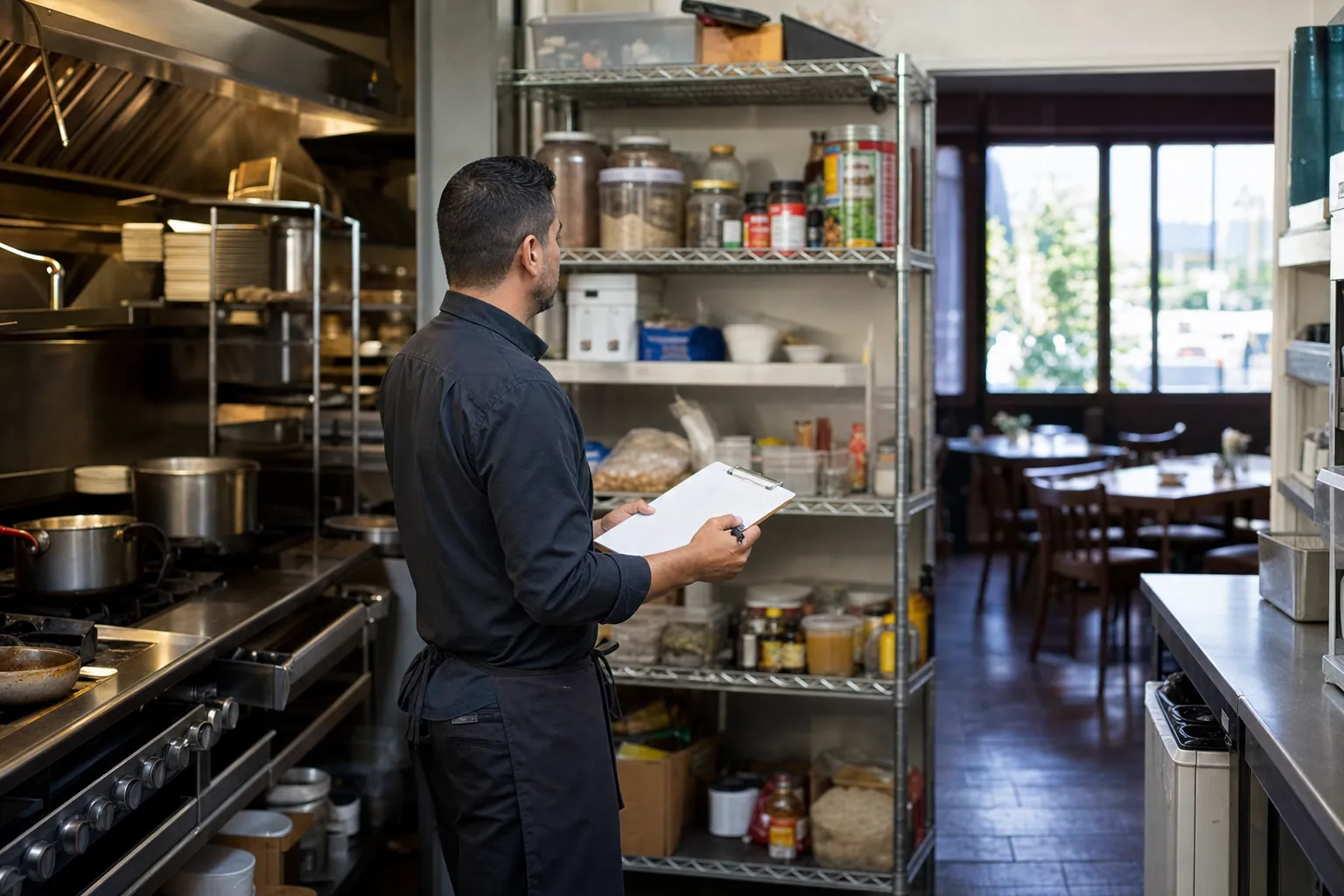
Safety works best when it is part of opening, prep, and closing, not a binder that comes out after an incident. A manager does not need to hold a long meeting every day. A consistent five- or ten-minute walk-through can catch the conditions that create trouble: a wet floor, a blocked aisle, a loose mat, a dull knife, a damaged cord, an overloaded shelf, or a piece of equipment that is not working as it should.
Make the check specific to the shift. The opening team may need to inspect entrances, walkways, floor mats, and prep equipment. The kitchen team may need to check guards, knives, hot equipment, and storage paths before deliveries arrive. The closing team can clear clutter, clean spills and grease, return tools to their proper places, and make a note of anything that needs service. When people see small issues acted on quickly, they are more likely to report the next one.
- Walk the kitchen, dish area, bar, entrances, and stockroom with an eye for wet surfaces, clutter, lighting, and blocked paths.
- Confirm that carts, hand trucks, gloves, mats, and first-aid supplies are available and in working condition.
- Remove damaged tools and equipment from normal use until they are properly repaired or replaced.
- Assign a clear owner for each correction, rather than leaving a hazard as a note for the next shift.
- Brief the team on one timely risk, especially after a staffing, menu, equipment, or weather change.
When an injury happens, respond with care and consistency
An injury can be stressful for the employee and the manager. A calm, prepared response protects both. Put immediate care first, then follow the restaurant's reporting process. Record the facts while they are fresh, identify the conditions that contributed, and notify the appropriate carrier or claim contact promptly. Avoid making promises about claim outcomes or assuming that a person should simply work through an injury.
Use the incident as a learning moment without blaming the injured person. If a box was stored in a walkway, the useful question is why that happened and how the layout or routine can change. If a new employee used a tool incorrectly, the answer may be clearer demonstration, better supervision, or a safer tool placement. Correcting the system is more effective than hoping the same event does not repeat.
A return-to-work plan can also be worth discussing with the carrier and appropriate professionals when an employee is able to perform modified duties. Restaurants often have a variety of tasks, but any work arrangement should be thoughtful, medically appropriate, and consistent with the claim process. Do not invent a light-duty role after the fact. Think ahead about which genuine tasks could be available if they are needed.
Illinois workers' compensation requirements
For Illinois restaurant owners, workers' compensation is not optional for a typical staffed operation. The Illinois Department of Insurance states that an employer with even one part-time employee must provide coverage. Ownership structure can affect who elects coverage, so the specific arrangement should be reviewed rather than guessed at.
The consequences of operating without required coverage can be serious. The state says a knowing and willful failure may bring a fine of up to $500 per day, with a minimum of $10,000, and may lead to a work-stop order. It also notes that an uninsured employer can lose protections under the Workers' Compensation Act. That is a strong reason to review payroll, job duties, locations, and staffing changes before they create a coverage gap.
Use claims prevention to improve the coverage conversation
A workers' compensation review should reflect how your restaurant actually operates. Share the full picture: number of employees, roles, payroll, delivery activity, kitchen equipment, past claims, changes in ownership, and any new location or service model. Good information helps the policy discussion start with the work your people do, not a generic restaurant description.
At E&A Insurance Group, we bring restaurant owner-operator experience to that review. We can help you connect the day-to-day safety habits with the coverage questions that matter at renewal. Explore our workers' compensation coverage, review the larger restaurant insurance picture, or start a free quote request.
This article offers general information, not legal advice, claim advice, or a coverage guarantee. The policy, applicable law, and the facts of an injury control what may apply.
Questions owners ask
Restaurant workers' compensation FAQs
Is workers' compensation required for Illinois restaurants?
In Illinois, an employer with even one part-time employee generally must provide workers' compensation coverage. Specific ownership and employment arrangements can affect the answer, so review your situation with a qualified advisor and the Illinois Department of Insurance guidance.
What does workers' compensation insurance cover?
Workers' compensation is designed to address covered work-related injuries and illnesses. Benefits, eligibility, medical treatment, wage replacement, exclusions, reporting duties, and claim decisions are governed by Illinois law and the applicable policy, not a general summary.
Can a restaurant reduce workers' compensation claims?
No prevention program can eliminate every injury, but consistent training, safe work practices, housekeeping, equipment maintenance, and a clear injury-response plan can reduce avoidable hazards. New-hire orientation deserves particular attention in a restaurant setting.
What should a restaurant do after an employee injury?
Put the employee's immediate safety first, obtain appropriate medical care, document the incident, notify the carrier or claim contact promptly, and follow the reporting rules that apply. Maintain a respectful, consistent process and do not discourage reporting.