A restaurant risk management checklist is not a stack of policies on a shelf. It is a practical way to see what could interrupt a shift, hurt a guest or employee, damage the property, or make a difficult day harder to recover from. The best checklists stay close to the work: the kitchen, the dining room, the records, the team, and the decisions an owner makes before a problem becomes urgent.
Use this guide as a regular owner review. It is not a substitute for the requirements of your lease, policy, local authority, legal counsel, or licensed specialist. It does help you bring the right facts forward early, while there is time to fix a hazard, clarify a responsibility, or review coverage around a real change in the business.
1. Walk the operation with fresh eyes
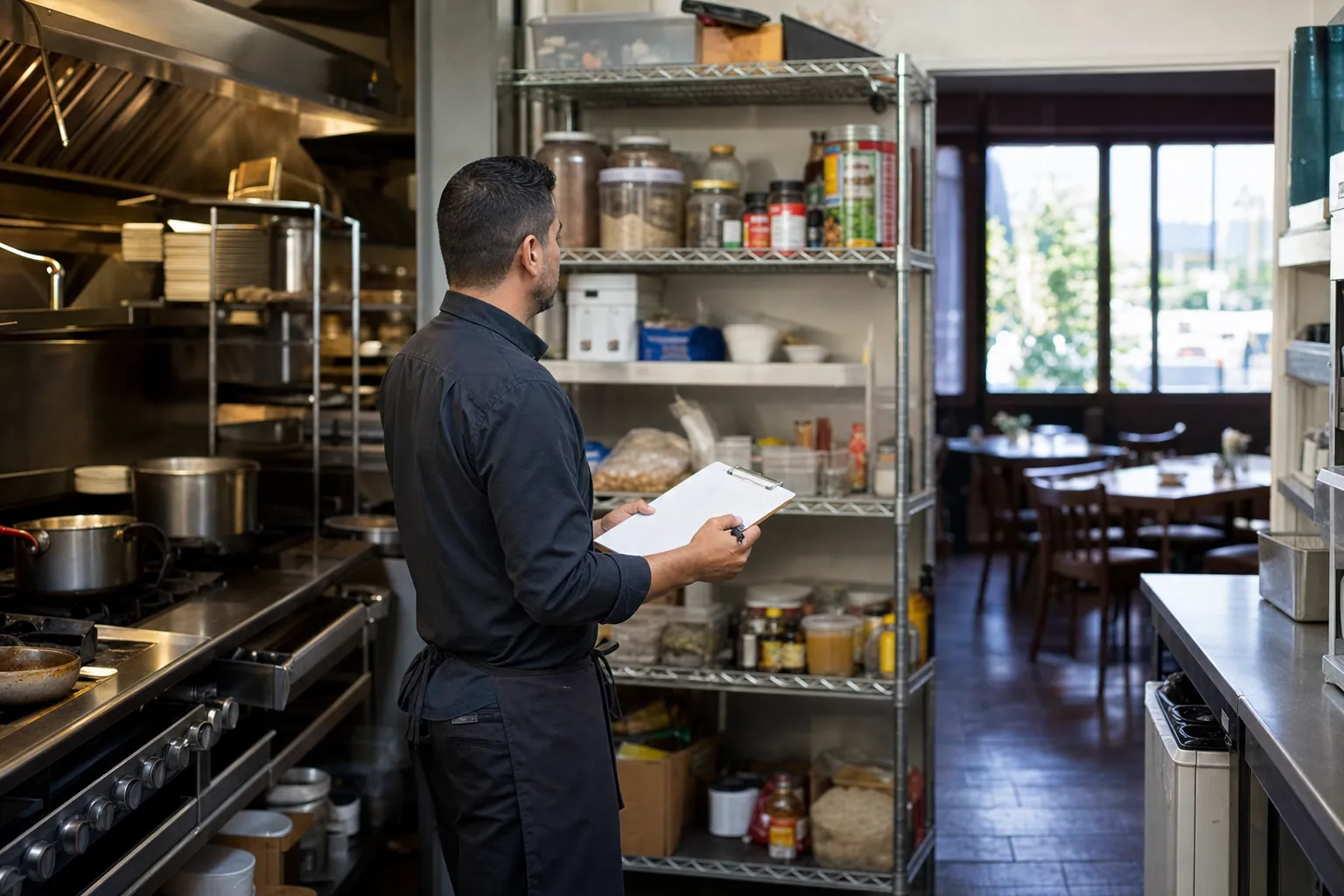
Start with a simple walk-through before service. Look for wet floors, loose mats, blocked aisles, damaged cords, overloaded shelves, poor lighting, worn door hardware, and storage that has wandered into an exit path. These small conditions are easy to normalize when the team sees them every day. They are also the sort of issue that can lead to an injury, a fire concern, a guest complaint, or a frustrating inspection finding.
The Occupational Safety and Health Administration's restaurant safety guidance groups common hazards around slips, trips, falls, cuts, burns, lifting, chemicals, and equipment. That is a useful framework for an owner walk-through because it keeps attention on the places where restaurant work moves fastest. Give each issue an owner and a deadline. A hazard does not become managed just because it was noticed.
Bring your team into the routine. A cook may see a problem around the line that an owner misses. A server may know which entrance gets slick in rain. A dishwasher may spot an unsafe workaround before it becomes a claim. Good reporting is a sign that people expect concerns to be fixed, not ignored.

2. Treat food safety as an operating control
Food safety belongs on the same checklist because an interruption does not have to start with a fire or injury. Temperature failures, cross-contamination, poor handwashing, an equipment problem, or a supplier issue can affect guests, staff time, inventory, and the business's reputation. The FDA Food Code is the model used by many retail food programs and is a useful reference for the core controls restaurants need to maintain.
Keep the review practical. Confirm that temperature logs, cleaning routines, handwashing supplies, allergen procedures, and equipment checks reflect how the kitchen actually works during a rush. Replace the assumption that “someone handles that” with a clear answer about who checks the task, where the record lives, and what happens when a reading is out of range.
Also think ahead about interruption. Know who can service refrigeration, who can approve emergency product replacement, and how a manager will document a spoilage event or a guest complaint. Those decisions are easier when they are part of an ordinary routine instead of a late-night scramble.
3. Protect the property that keeps service moving
Restaurants depend on a dense mix of property: cooking equipment, refrigeration, furniture, point-of-sale equipment, tenant improvements, stock, signage, and sometimes a building or vehicle. A useful property review begins with what the business owns or is responsible for under the lease. It should also include the equipment that would make service impossible if it failed tomorrow.
Review the cooking line, hood, suppression system, electrical equipment, walk-ins, freezers, floors, roof leaks, plumbing, and storage areas. Retain current service records and invoices. E&A's restaurant insurance inspection checklist covers the practical preparation around hoods, extinguishers, housekeeping, exits, and documentation. The separate kitchen fire prevention guide is useful when the cooking line needs a closer look.
Ask one simple question for each key asset: if this failed or were damaged, what would it stop us from doing, and how long would recovery take? That question reveals priorities faster than a generic equipment list. It also helps an insurance conversation reflect the restaurant's real pressure points.
4. Make employee safety part of every shift
Most restaurant owners know the familiar risks: cuts, burns, slippery floors, lifting, repetitive movement, cleaning chemicals, and crowded work areas. The challenge is making prevention fit into a real shift. A long safety meeting is rarely the answer. A short, specific pre-shift check is more likely to happen: What changed today? Is a floor wet? Is equipment working? Are deliveries blocking an aisle? Does a new employee need a reminder or hands-on demonstration?
Use E&A's guide to common workers' compensation claims at restaurants to focus on the injuries that create the most disruption. Then check that managers know what to do after an employee is hurt: care comes first, facts should be documented promptly, the hazard should be addressed, and the reporting process should be followed without blame or delay.
For Illinois operations, an accurate review of payroll, job duties, delivery work, seasonal hiring, and multiple locations matters alongside the day-to-day safety routine. The workers' compensation coverage page explains why the policy should reflect the people and work behind the operation, not a generic job description.
5. Review alcohol, contracts, and outside commitments
Risk can change as soon as the restaurant signs a new agreement. A lease, loan, franchise agreement, delivery arrangement, catering contract, event booking, vendor relationship, or liquor license can carry obligations that deserve a review before the commitment becomes urgent. Collect the relevant pages, then highlight insurance limits, named parties, certificate deadlines, indemnity language, and special requirements that need a direct answer.
Alcohol service deserves its own conversation. A busy beer-and-wine restaurant, a cocktail bar, a patio, a private event, or an off-premises catering job can create different coverage and operational questions. The Illinois Liquor Control Commission is the starting point for state-level licensing information. For the wider insurance discussion, review E&A's Illinois liquor liability coverage guide and the related liquor liability article.
Do not leave a new contract in someone else's inbox until renewal. A five-minute question before signing can prevent a certificate request, coverage requirement, or event detail from becoming a last-minute problem.
6. Plan for an interruption, not just the damage
A property loss can close a restaurant long after the immediate mess has been cleaned up. Repairs, permits, equipment replacement, lost inventory, staffing decisions, and the timing of reopening all affect the business. Your risk checklist should therefore include the financial records and practical decisions that make recovery possible: recent sales reports, payroll, profit-and-loss statements, lease obligations, loan payments, supplier contacts, emergency vendors, and the communication plan for employees and guests.
FEMA's business preparedness resources emphasize planning before an emergency rather than trying to make every decision during one. For a restaurant, that can mean knowing where essential records are stored, who has authority to spend money in an emergency, and whether a temporary service arrangement is realistic. The plan does not need to predict every scenario. It needs to make the first few hours and days more orderly.
Review business interruption insurance for restaurants alongside the broader coverage overview. Property coverage and business income coverage address different questions, and the actual policy terms determine what may apply. Good records and a realistic recovery discussion make that policy review much more useful.

7. Protect payment, account, and customer information
Restaurant risk now includes the systems that accept payments, take online orders, store employee records, and run day-to-day communication. A compromised email account, shared password, lost device, or fraudulent invoice can interrupt an operation just as surely as a broken freezer. The Cybersecurity and Infrastructure Security Agency's Secure Our World guidance focuses on practical habits such as strong passwords, multifactor authentication, software updates, and recognizing phishing attempts.
Keep the checklist simple: identify who has access to the point-of-sale system, payroll, bank accounts, vendor portals, and social accounts; remove access when roles change; require multifactor authentication where it is available; keep devices updated; and establish a verbal check before a large payment or bank-detail change. Do not rely on one employee's personal email or phone as the only way to access an important business account.
Ask your technology, payment, and insurance advisors where their responsibilities begin and end. A sensible process helps limit the chance that a routine email or password problem turns into a financial loss or a difficult customer conversation.
8. Keep records current and close the loop
A risk checklist becomes valuable when it creates a habit of follow-through. Keep one current place for service reports, inspection findings, certificates, equipment invoices, lease requirements, incident reports, emergency contacts, and insurance documents. Digital storage is fine when the right people can reach it during a disruption. Paper copies may also be useful for key life-safety records and contact lists.
Set a regular cadence. A monthly walk-through can handle property, housekeeping, and safety items. A quarterly review can cover vendors, technology access, records, and changes in the operation. Before renewal, take the fuller view: sales, payroll, locations, equipment, alcohol service, vehicles, contracts, claims, staffing, and plans for the year ahead. Give open items an owner, a due date, and a clear definition of what “done” means.
That approach is what turns risk management into a calmer way of operating. The restaurant does not need to be perfect. It needs a clear picture of the issues that matter, a willingness to act early, and the right people in the conversation when the business changes.

How E&A helps restaurant owners use the checklist
E&A Insurance Group brings more than 35 years of restaurant owner-operator experience to insurance conversations. That perspective keeps the discussion grounded in the real operation: what changes during service, what a lease requires, what equipment keeps revenue moving, and which details can create pressure later when no one asks about them early.
Use this checklist to prepare for a more informed review, then explore E&A's Illinois restaurant insurance guide or start a free quote request. The goal is not to add paperwork. It is to make the coverage conversation reflect the business you actually run.
Questions owners ask
Restaurant risk management FAQs
What is restaurant risk management?
Restaurant risk management is the regular work of identifying hazards, reducing preventable losses, and preparing the business to respond when something goes wrong. It includes workplace safety, food handling, property maintenance, employee practices, records, technology, contracts, and insurance. The right priorities depend on the restaurant's actual operation.
How often should a restaurant review its risks?
A short review works well whenever the operation changes, such as adding a location, patio, alcohol service, delivery, catering, equipment, or new roles. A more complete review is useful before renewal and before a busy or seasonal period. The goal is to keep the routine current, not to create a once-a-year binder that no one opens.
Who should own restaurant risk management?
The owner should set expectations, but the work should be shared. A kitchen manager may own cooking-line checks, a front-of-house manager may watch entrances and guest areas, and the person handling records may maintain certificates and invoices. Give each item a clear owner, then make time to close out open issues.
Can insurance replace a restaurant safety plan?
No. Insurance may help address covered losses, subject to the policy terms, but it does not remove the need for safe work practices, maintenance, training, food-safety controls, or a prepared response. The strongest approach combines sensible operations with an accurate coverage review.