
A catering business can look straightforward on an invoice and complicated everywhere else. One job may involve a shared kitchen, an off-site venue, rented equipment, temporary staff, a delivery vehicle, a client contract, and a request for proof of insurance. The next job may involve none of those things, or add alcohol service and a different venue packet. That is why catering insurance requirements are best handled as an event-ready process, not a last-minute document request.
This guide is for Illinois caterers who want to organize the questions before accepting an event, renewing a policy, or replying to a venue. It does not replace the terms of a policy, a contract, or advice from a qualified professional. It does give an owner a practical way to collect the facts that turn a vague request for “insurance” into a useful coverage conversation.
Start with the event, not the policy name
There is no single checklist that fits every catering operation. Requirements can arise from the business itself, the people it employs, the vehicles it uses, the food it prepares, the alcohol it handles, a client agreement, or a venue's own rules. The first job is simply to describe the work accurately. Is this a drop-off order, a staffed buffet, a wedding reception, a pop-up, a festival, or a recurring corporate account? Is food prepared in a licensed kitchen, held for service, transported across town, or finished on-site?
Build a short event profile before you sign. Include the legal name of the client and venue, the date and service hours, guest count, locations used, menu and service format, kitchen arrangements, equipment, delivery plan, staff roles, subcontractors, alcohol responsibilities, and the exact documents the venue requested. Keep the contract and venue packet with that profile. A complete picture makes it easier to spot a detail that needs review before the truck is loaded.
For temporary food events, Illinois Department of Public Health guidance says permits and licenses are issued by the local health department, and operators should contact that department before setting up. The state also notes that food preparation for a temporary operation must occur at the approved temporary location or a kitchen approved by the local health department. That is a practical reminder that coverage, food-service approval, and a venue's rules should be checked together rather than in separate silos.
Read venue and client requirements line by line
Venue packets often arrive late in the booking process, sometimes with a request for a certificate of insurance, stated limits, a named party, or specific wording. Treat the packet as an operating document, not a box to tick. Confirm the exact legal name and address requested, the event dates including setup and teardown, the locations, the limits, and whether the venue is asking for a certificate only or a particular endorsement. Those are different requests.
A certificate is evidence of insurance information at a point in time. It does not rewrite the policy or cure a mismatch between the agreement, the event plan, and the coverage in force. If a contract asks the caterer to take responsibility for something outside the normal service plan, or if the requested language is unfamiliar, bring the full document into the discussion early. Last-minute paperwork tends to make everyone less careful, which is a lousy time to discover that a request needs clarification.
Keep a simple intake record for repeat venues. Save the venue's requirements, the contact person, the documents supplied, the event date, and any special conditions. On the next booking, compare the new packet rather than assuming the old one still applies. A venue can change its requirements, management company, insurance wording, or event rules.

Map the coverage conversation to the real work
Coverage names are only useful when they match the work. General liability is commonly part of the conversation when guests, clients, venues, and other third parties are involved. Food-related allegations, property damage at a venue, rented space, and completed work can all raise questions that deserve a clear review of the actual policy terms. Do not assume an insurance label tells the whole story. Ask how the policy, limits, endorsements, exclusions, and service model fit together.
Equipment deserves the same honesty. List the hot boxes, serviceware, portable cooking equipment, computers, point-of-sale equipment, tables, linens, and rented items that travel to events. Note what the business owns, rents, borrows, or stores off-site. A current equipment list is useful for planning as well as for a coverage conversation because it makes the operation tangible. “We cater weddings” is broad. “We transport three hot boxes, two rolling racks, rented glassware, a portable bar, and a refrigerated trailer” is the kind of detail that prompts better questions.
Do not overlook the gaps between locations. A central kitchen, commissary, storage unit, loading area, vehicle, temporary event space, and client's property may each create different responsibilities. E&A's catering operation insurance guide can help organize the wider picture across food service, venues, vehicles, staff, and equipment.
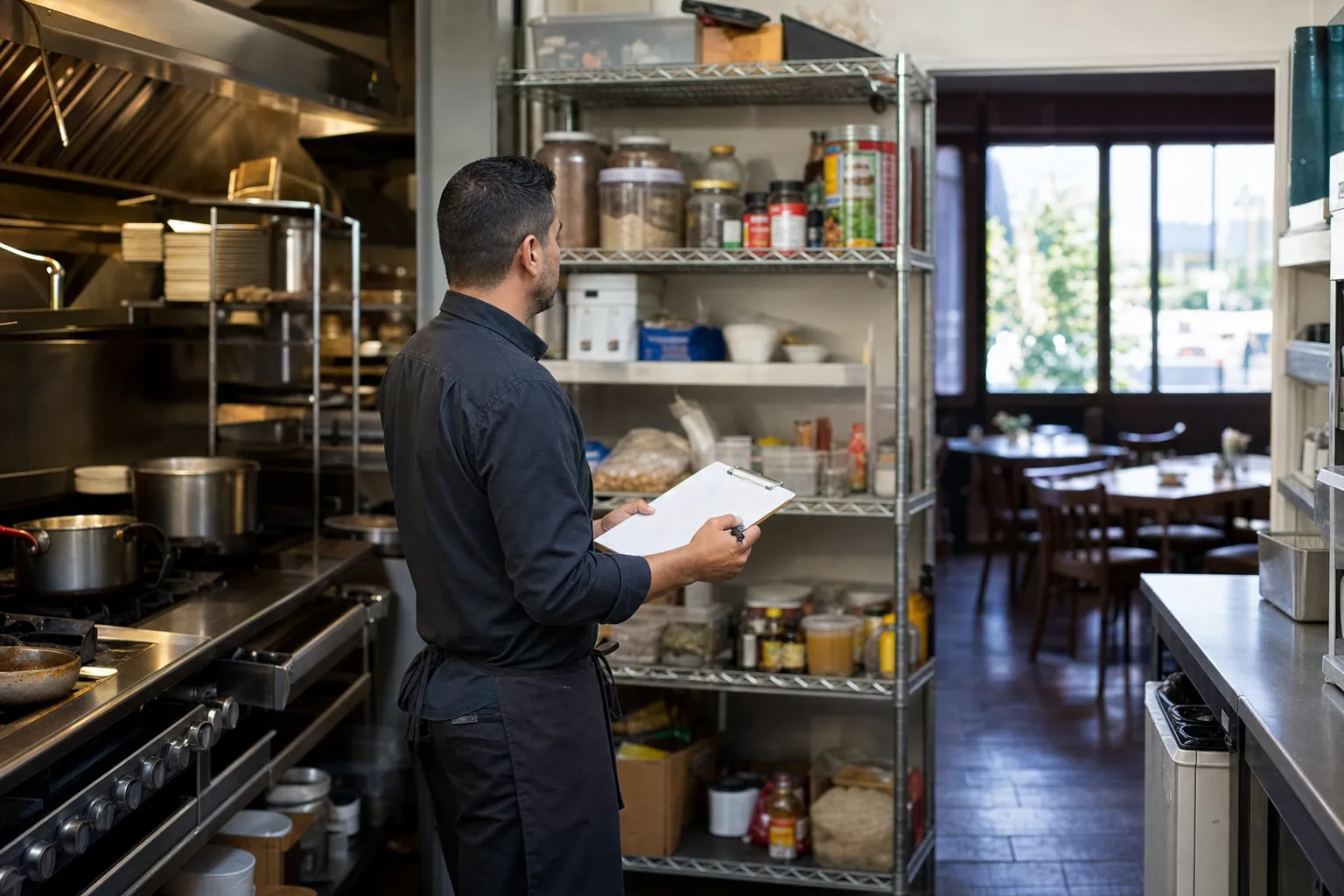
Staff, subcontractors, and workers' compensation
Catering teams move fast, especially when staffing changes from event to event. Make a current list of employees, job roles, seasonal hires, and outside vendors. Identify who loads vehicles, drives, sets up, serves guests, works around hot equipment, handles cleanup, or supervises service. That information matters to a safe event plan and to the way the business describes its operations.
Illinois workers' compensation rules are not something to guess at from a generic internet list. The Illinois Workers' Compensation Act sets out how covered employers secure their liability, including through an authorized carrier or self-insurance where permitted. If the business has employees or a changing staffing model, review the current arrangement with a qualified advisor and keep the operating description accurate. The right answer can depend on the actual employment relationship and the work being performed.
Subcontractors need equally clear boundaries. A venue-provided bartender, a rental company, an outside chef, a florist, a valet provider, and an independent event planner may each have their own obligations. Keep the signed agreement, scope of work, and insurance request together. The goal is not to shift blame on paper. It is to make sure responsibilities are understood before a guest asks who is handling a problem.
Vehicles and off-site logistics belong in the review
Catering work is mobile by design. Food, supplies, staff, equipment, and sometimes rented property move between kitchens and events. List every vehicle arrangement used for the work, including business-owned vans, personal vehicles used for errands, rentals, trailers, and employee drivers. Then describe the actual use: delivery only, staff transport, towing, refrigerated transport, repeated runs between locations, or late-night pickup.
Illinois requires liability coverage for vehicles operated, registered, or maintained for use on public highways, but the insurance arrangement needs to reflect the business use and the policy terms. That is why caterers should bring vehicle details into the same review as the venue and event plan. E&A's commercial auto overview is a useful starting point for the questions around owned vehicles, employee drivers, and operational use.
Small logistics details can become large event problems. Decide who loads heavy equipment, where it is secured, who checks the route and parking rules, who has keys, and how the team handles a vehicle issue on the way to an event. The goal is a repeatable handoff, not a heroic scramble at the loading dock.

Alcohol service needs its own conversation
Alcohol can change the event profile quickly. A caterer may supply food only, provide a bartender under a client's plan, sell a package that includes alcohol, operate at a licensed venue, or take responsibility for bar service. Those are not interchangeable arrangements. Write down who buys alcohol, who owns it, who takes payment, who serves it, who checks identification, who sets service rules, and who can stop service.
Illinois has a specific caterer retailer category in its liquor licensing materials, and the Illinois Liquor Control Commission's application lists documents including a local liquor license and a certificate of insurance for that category. That does not decide the correct answer for every caterer or every event. It does make the point: licensing, venue terms, alcohol-service duties, and insurance should be considered together before promising a client that a bar arrangement is covered.
For a deeper look at the service model, venue requests, and event documentation, read E&A's liquor liability guide for caterers. Use it to prepare questions, not to make assumptions about a particular policy or legal obligation.
An event-ready catering insurance checklist
- Collect the signed contract, venue packet, event date, setup and teardown times, and the venue's exact legal name.
- Describe the service model, including food preparation, transport, on-site work, equipment, staff, subcontractors, and alcohol roles.
- List every location used for the job: kitchen, commissary, storage, loading area, venue, parking area, and delivery route.
- Review requested limits, named parties, certificates, and endorsements before committing to the event.
- Keep an equipment inventory and note what is owned, rented, borrowed, or supplied by a venue or client.
- Review employee roles, temporary staffing, and outside vendor responsibilities.
- Bring vehicle use, drivers, trailers, rentals, and delivery arrangements into the coverage review.
- For alcohol service, identify who buys, sells, serves, supervises, and documents the plan.
- Ask how the current policy terms apply to the actual work, then keep the answer with the event file.
How E&A helps Illinois caterers prepare
E&A Insurance Group brings restaurant owner-operator experience to coverage conversations with food-service businesses. That matters because a catering operation is more than a kitchen and a menu. It is a moving set of contracts, venues, people, equipment, and service decisions that need to make sense together.
Our Illinois caterer insurance page outlines the areas a caterer may want to review. If a venue request, a new service model, a staffing change, or an upcoming event has raised questions, request a free coverage review with the event details already organized. It is a more productive conversation, and it is far better than trying to reconstruct the job after something has gone sideways.
Questions caterers ask
Catering insurance requirements FAQs
Is there one insurance policy every caterer is required to have?
There is no one-size-fits-all answer. The requirements can come from the business model, employees, vehicles, alcohol service, a venue, a client contract, and local rules. The useful step is to compare the actual event and operating details with the policy and any written request before accepting the job.
What should a caterer send when a venue asks for proof of insurance?
Start with the venue's complete written requirement, including the legal name and address, requested limits, dates, and any endorsement wording. A certificate can show evidence of coverage, but it does not amend the policy. Ask for the request early enough to resolve a mismatch before setup day.
Do caterers need to discuss liquor liability for every event?
A caterer should raise the question whenever it sells, provides, serves, manages, or takes responsibility for alcohol. The licensing arrangement, staff roles, contract, venue rules, and policy wording all matter. Do not assume general liability answers an alcohol-service question.
What event details should be ready for an insurance review?
Bring sample contracts, venue packets, event locations, guest counts, service hours, menus, alcohol roles, staffing details, equipment lists, vehicle use, certificates already requested, and any unusual services. Specific facts make a coverage conversation more useful than a generic description of the business.
Illinois operating guidance: Illinois Department of Public Health. Alcohol licensing reference: Illinois Liquor Control Commission. Employment coverage reference: Illinois Workers' Compensation Act.