
Mobile catering gives an owner freedom to meet customers where the work is: at a festival, office park, wedding, brewery patio, construction site, farmers market, or private event. It also means the operation changes every time the wheels move. A vehicle, trailer, cart, tent, commissary kitchen, loading area, event contract, equipment list, and staff plan can all matter before the first order is served.
That is why mobile catering insurance is not a question to answer with one policy name. It is a review of how the business actually travels, prepares food, sets up, serves, and closes down. This guide helps Illinois caterers organize that conversation. It is not legal advice or a promise of coverage. The policy wording, the event agreement, and the facts of a loss control. But getting the right details together early can keep a routine booking from becoming a last-minute mess.
Start by mapping the mobile operation
“Mobile catering” can describe very different businesses. One owner may run a self-contained food truck. Another may tow a trailer behind a pickup, then prepare and serve under a tent. A coffee cart may work indoor corporate events. A caterer may prepare food in a commercial kitchen, make deliveries in a van, and set up a staffed buffet at a different location. Those models should not be treated as interchangeable.
Write down the moving parts before discussing coverage. Include the vehicle or tow vehicle, trailer or cart, food preparation location, storage, loading area, route, service site, equipment, inventory, staff, and any rented or borrowed property. Note whether the work is daily street service, weekend markets, private catering, seasonal festivals, recurring corporate work, or a mix. That basic map gives an insurance advisor something concrete to review rather than a vague description of “catering.”
It also makes operational gaps easier to see. If food is prepared in one location, held in a carrier, transported across town, and finished at a venue, the team should know who is responsible at each handoff. The same applies to setup, power, propane or other equipment, customer lines, cleanup, and securing the unit after service. A clear operation map supports a better insurance discussion because it starts with how the business earns its revenue.
Separate the road question from the business question
One of the most common sources of confusion is assuming that one form of protection answers every question. The vehicle that drives or tows the unit, the trailer or truck body, the equipment inside it, the stock in transit, and the business activity at an event may involve separate considerations. The right answer depends on the particular policy and the way the business operates.
Start with the actual road use. Is a vehicle business-owned, personally owned, rented, borrowed, or driven by an employee? Is it used for deliveries, towing, employee transport, repeated runs between a kitchen and a venue, or late-night breakdown? Is the trailer permanently fitted out, loaded with equipment, or parked at a site for several days? Do not assume ordinary personal use language describes commercial catering work accurately.
Then keep the event-site questions in view. A vehicle may get the crew to the job, but it does not answer what happens while food is served, equipment is unloaded, a tent is set up, or customers are waiting near the service area. E&A’s commercial auto overview is a useful starting point for organizing the vehicle and driver questions. The purpose is not to guess what is covered. It is to make sure the policy review reflects the business use, the people driving, and the assets moving between locations.

Inventory the equipment that leaves the kitchen
Mobile caterers often own more than they realize until a busy setup day. Hot boxes, coolers, coffee equipment, generators, portable cooking units, serviceware, point-of-sale tools, tables, tents, signage, linen, racks, and smallwares can be spread among a kitchen, storage unit, vehicle, trailer, and event site. Rental equipment adds another layer because the agreement can assign responsibilities that are easy to miss when the truck is being loaded.
Build a simple equipment list with a description, approximate value, ownership status, usual storage location, and where each item travels. Keep invoices, rental agreements, and serial numbers where they can be found. The list does double duty: it helps the crew load consistently, and it gives the business a far better starting point for a coverage review or a difficult conversation after a loss.
Be equally specific about food and supplies. Refrigerated ingredients, prepared food, dry stock, beverages, disposables, and client-owned items may all travel differently. A power failure, vehicle issue, weather event, or delay can affect more than the unit itself. The review should reflect the real value and movement of the business property, not just the most expensive visible piece of equipment.
Check the event site before committing
A mobile operation can be well organized and still face a site that changes the job. A private event, municipal festival, brewery patio, farmer’s market, wedding venue, or corporate campus may have different rules for access, parking, power, water, waste, fire safety, service hours, setup timing, crowd control, and certificates of insurance. Get those details in writing before you promise a client that the team can serve there.
For temporary food operations, the Illinois Department of Public Health says permits and licenses are issued by the local health department, and operators should contact that department before setting up. Its guidance also says food preparation must occur at the approved temporary location or a kitchen approved by the local health department. Local requirements can differ, so treat the venue packet and the local health department as real planning documents, not an afterthought after the menu is booked.
Ask for the site’s exact legal name and address, the dates and hours including setup and teardown, the requested limits, any named-party requirements, and any special wording. A certificate of insurance can provide evidence of coverage information, but it does not rewrite a policy. If the contract or request uses language the owner does not understand, bring the complete document into the discussion early. Waiting until a venue is asking for paperwork by Friday is a poor moment to discover that the event plan and the contract do not match.

Plan for staff, service, and food handling
Mobile work asks people to do several jobs in a short window: load, drive, set up, prepare, serve, take payment, handle equipment, clean, and break down. List who does each job and who supervises the site. Include seasonal employees, family members, temporary workers, contractors, venue staff, bartenders, and any delivery help. Clear roles are good business practice, and they make a coverage conversation more accurate.
Food handling is part of that reality. The Illinois Department of Public Health states that employees of mobile food establishments are required to have food handler training. This is not an insurance requirement by itself, but it is a useful reminder that the operational plan, health requirements, staffing plan, and coverage discussion should line up. A crew cannot safely improvise its way through a different menu, a new trailer layout, a busy crowd, or a borrowed piece of equipment.
Keep basic event records too: who worked, what was served, when the team arrived and left, equipment brought to the site, temperature or cleaning records where required, and any incident or near-miss. These habits support a disciplined operation and help the business describe its procedures more clearly when insurance questions arise.
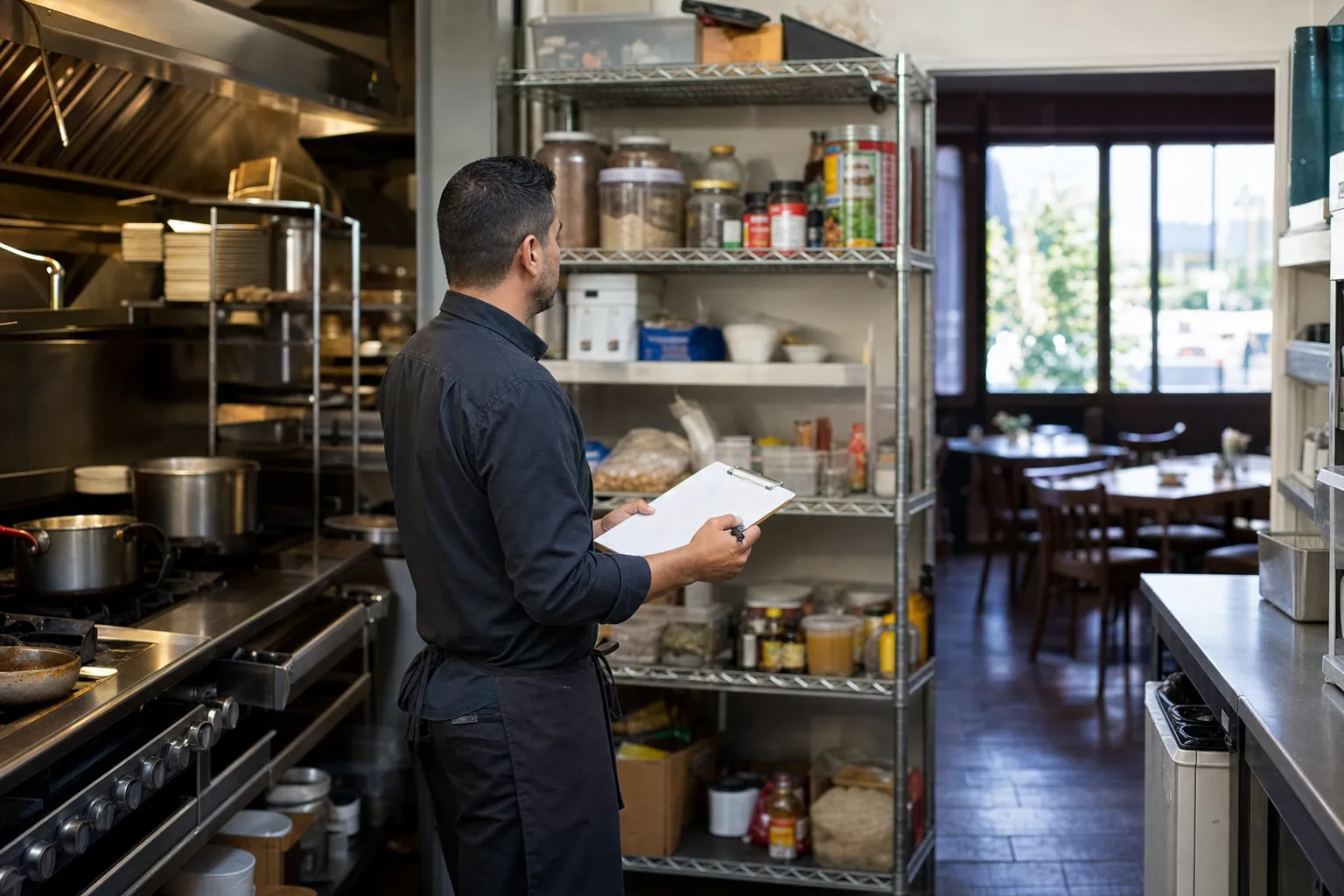
Do not leave alcohol service to assumption
A food-only pop-up, a venue-run bar, a client-supplied bartender, and a catering package that includes alcohol are different arrangements. When alcohol is part of a job, identify who buys it, owns it, takes payment, serves it, checks identification, establishes service rules, and can stop service. Put those details beside the venue agreement and the rest of the event plan.
The Illinois Liquor Control Commission is the state starting point for liquor licensing information, while local rules and venue conditions can add another layer. For the insurance discussion, review E&A’s liquor liability guide for caterers. It helps owners organize the questions about event roles and documentation without making a blanket promise about a particular policy or event.
Use a pre-event mobile catering checklist
- Describe the service model: truck, trailer, cart, tent, delivery, staffed event, or a combination.
- List the vehicle, drivers, trailer, route, parking plan, and any rental or borrowed equipment.
- Keep an equipment and stock inventory with ownership, value, storage, and travel details.
- Collect the event contract, venue rules, legal name, address, setup and teardown times, and written insurance request.
- Confirm food preparation and food-handler requirements with the relevant local authority before the event.
- Assign loading, driving, setup, service, payment, cleanup, and breakdown responsibilities.
- For alcohol, document who buys, sells, serves, supervises, and sets the rules.
- Review the actual work with an insurance advisor before accepting obligations that do not fit the operation.
How E&A helps mobile caterers prepare
E&A Insurance Group brings restaurant owner-operator experience to coverage conversations with food-service businesses. That perspective is useful for mobile caterers because the job is never only the trailer or only the event. It is the movement of people, food, equipment, contracts, and service responsibilities between locations.
Our Illinois caterer insurance page outlines the coverage areas worth reviewing for an event-focused business. If a new vehicle, trailer, route, venue contract, or service model has raised questions, request a free coverage review with the details organized. The conversation is more useful before the wheels roll, not after a busy event has exposed an assumption.
Questions caterers ask
Mobile catering insurance FAQs
Does a mobile catering policy automatically cover the vehicle or trailer?
Not automatically. A policy may address business liability, equipment, stock, a vehicle, a trailer, or some combination of those concerns in different ways. The useful step is to describe what is driven, towed, stored, and used at the event, then review the actual policy terms instead of relying on a broad label.
What should a mobile caterer tell an insurance advisor?
Share the service model, food preparation location, vehicle and trailer details, equipment list, event locations, staff roles, delivery activity, alcohol responsibilities, contracts, and any venue requirements. Specific facts give the advisor a much clearer basis for discussing the coverage questions that apply.
Do food trucks and catering trailers face the same insurance questions?
They can overlap, but the details matter. A food truck, a trailer towed by another vehicle, a coffee cart, a pop-up tent, and a delivery-focused caterer may use different equipment, travel differently, and take on different responsibilities at a site. Each arrangement should be described as it actually operates.
When should a mobile caterer review insurance?
Review before adding a vehicle or trailer, taking on a new event type, changing food preparation arrangements, adding employees, serving alcohol, signing a venue contract, or renewing. These changes can affect the questions worth asking before a busy season or event date.
Illinois food-operation guidance: Illinois Department of Public Health temporary food operations guidance and Illinois food-handler training FAQ. Alcohol licensing reference: Illinois Liquor Control Commission.